How to Choose the Best Food Wrap Machine in 2026?

Time:2026-09-18 Author:Oliver
0%

Choosing the right Food Wrap Machine in 2026 requires more than comparing prices and advertised wrapping speeds. A machine may look impressive on a showroom floor, yet perform poorly beside your production line. Film thickness, product shape, sealing temperature, and available space all matter.

Dr. Susan Selke, a respected packaging educator and author, offers a useful principle: “Packaging decisions should consider the entire system, not one feature alone.” That idea should guide every purchase. A reliable Food Wrap Machine must match your products, film materials, hygiene procedures, labor skills, and future output goals. It should also support stable sealing, accurate film cutting, quick changeovers, and simple daily cleaning. Small details matter. A sensor that misses irregular trays can create costly waste.

Operators should test real products before signing a purchase agreement. Bring different tray sizes, film rolls, and difficult shapes. Watch the machine during startup, continuous operation, and cleaning. Ask how quickly staff can adjust temperature and film tension. Ask about spare parts, training, service response, and software updates.

The cheapest option may not remain economical. Energy use, rejected packages, maintenance time, and downtime can quietly increase ownership costs. Still, no checklist can predict every factory challenge. I may favor automation too quickly, while a smaller producer may need flexibility instead. That uncertainty deserves honest review.

This guide examines the practical features, technical specifications, and supplier questions that can help buyers choose with greater confidence. The best machine is not always the fastest. It is the one that performs consistently in your actual working environment.
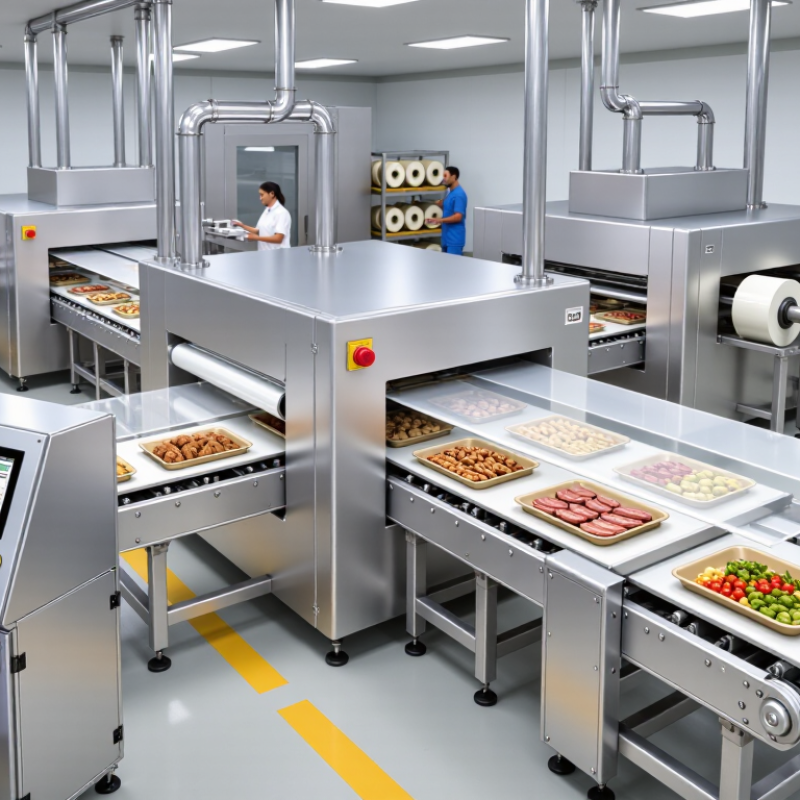
How to Choose the Best Food Wrap Machine in 2026?

Define Product, Film, and Output Needs at 30–150 Packs per Minute

How to Choose the Best Food Wrap Machine in 2026?

Define Product, Film, and Output Needs at 30–150 Packs per Minute

Choosing a food wrap machine starts with the product, not the machine frame. Measure length, width, height, weight, temperature, and surface moisture. A soft pastry needs gentle handling. A chilled tray may require stronger sealing control.

At 30 packs per minute, manual loading may remain practical. At 150 packs per minute, feeding accuracy becomes critical.

Small product changes can disrupt film tracking and sealing.

Film selection deserves equal attention. Test polyethylene, polypropylene, or laminated structures with the actual product. Check thickness, stiffness, shrink behavior, oxygen barrier, and seal contamination tolerance.

Smithers’ The Future of Flexible Packaging to 2028 reports continuing growth in flexible packaging demand, driven partly by convenience and shelf-life requirements. PMMI reported U.S. packaging machinery shipments of approximately 10.2 billion dollars in 2022. These figures show a competitive, automation-focused market.

Still, a larger machine is not automatically better. It may waste film, floor space, and energy.

Tips:

Run a real product trial before signing a purchase order. Record packs per minute, rejects, film waste, changeover time, and seal strength. Ask for performance at both minimum and maximum speed.

A neat spreadsheet can still mislead. Operators often notice awkward loading motions first. Include their feedback.

Also confirm whether future products will need modified atmosphere packaging, date coding, or wider film. Designing only for today’s product may become an expensive mistake.

Choose Stretch, Shrink, or Flow-Wrap Technology by Packaging Type

How to Choose the Best Food Wrap Machine in 2026?

Choose Stretch, Shrink, or Flow-Wrap Technology by Packaging Type

Stretch wrapping suits grouped cartons, trays, and palletized food products. It uses elastic film to secure loads without heat. This option works well for warehouse transport and short handling cycles. It is usually not the right choice for individually sealed food.

Shrink wrapping creates a tight, neat package around trays, multipacks, or irregular shapes. A heat tunnel tightens the film after sealing. The result looks professional, but heat-sensitive products may suffer quality changes. Check tunnel temperature, cooling time, and film behavior during real production. Small gaps can become serious sealing failures.

Flow-wrap machines suit biscuits, bakery items, produce, and other individual products. They form a film tube around each item and seal both ends. Product size, speed, and seal contamination matter greatly. Crumbs, oil, or moisture near the seal area can cause leaks. Choose a machine with accessible cleaning zones, clear adjustments, and reliable date coding.

Test the actual product, not a sample block. Measure seal strength, film waste, changeover time, and rejected packs. Confirm that all food-contact materials meet applicable requirements in your market. Operators should understand film tension, temperature, and maintenance routines. I have seen teams choose high speed first, then struggle with unstable seals. That mistake is easy to repeat. A slower machine with consistent packs may deliver better output. The best decision often comes from a practical trial, careful records, and honest review of production weaknesses.

Verify Seal Quality with MAP Oxygen Below 1% and Leak Testing

How to Choose the Best Food Wrap Machine in 2026?

Seal performance deserves more attention than machine speed. Modified atmosphere packaging should reach oxygen below 1% when the product specification requires it. This level helps limit oxidation and supports quality control. However, it is not a universal legal limit. Confirm the target with product studies, shelf-life trials, and validated procedures.

Use a calibrated headspace oxygen analyzer after sealing. Test samples at the same temperature and sampling time. Small changes matter. A wrinkled film corner can create a hidden leak. ASTM F2096 bubble testing can reveal gross leaks, while ASTM F2338 vacuum-decay testing supports non-destructive inspection. ISO 11607-1 also emphasizes validated packaging processes and consistent seal performance. Operators should record oxygen readings, seal temperature, pressure, dwell time, and film batch.

The FAO’s 2019 State of Food and Agriculture report estimated that 14% of food is lost between harvest and retail. Better packaging cannot solve every loss, but weak seals add avoidable waste. UNEP reported 1.05 billion tonnes of food waste in 2022, showing why dependable packaging controls deserve investment. In practical trials, I would inspect ten consecutive packs, then challenge the machine with slower film movement and product residue near the seal. A perfect number can still mislead. I have seen clean-looking packs fail after handling. Machine selection should therefore include repeatability data, leak-test capability, operator training, and documented corrective actions.

How to Choose the Best Food Wrap Machine in 2026?

Verify Seal Quality with MAP Oxygen Below 1% and Leak Testing

The chart compares six representative validation runs for modified-atmosphere packaging. Residual oxygen should remain below the 1.0% acceptance limit, while the leak rate should stay at or below 1.0% of tested packs. Consistently low values indicate stable sealing, reliable gas flushing, and effective leak control.

Audit HACCP, ISO 22000, CE, and UL Food-Safety Compliance

How to Choose the Best Food Wrap Machine in 2026?

Audit HACCP, ISO 22000, CE, and UL Food-Safety Compliance

Choosing a food wrap machine starts with risk control, not speed or price. In my experience, weak documentation often signals deeper hygiene problems. Ask for a HACCP-based hazard review covering film contact, cutting areas, lubrication, and cleaning access. The machine should support an ISO 22000 food-safety system through traceability, maintenance records, and controlled procedures.

Look closely at the details. Food-contact surfaces should be smooth, corrosion-resistant, and easy to inspect. Seals must resist moisture and cleaning chemicals. Request material declarations, test reports, calibration records, and a clear cleaning schedule. Watch the machine during a trial run. Film scraps can collect beneath guards, where routine cleaning may miss them. That small gap matters.

CE confirms applicable European conformity requirements, but it is not a complete food-safety certificate. Check the declaration, risk assessment, guarding, and electrical documentation. UL listing may support electrical acceptance in certain markets, yet local requirements still apply. Never treat a logo as proof of compliance. Verify the certificate scope and production model.

Ask who audits the factory. Ask how nonconforming parts are controlled. The answer may be uncomfortable. A reliable supplier welcomes these questions and provides evidence without hesitation. No audit is perfect. Your team should record findings, challenge assumptions, and reassess the machine after installation. A practical checklist often reveals more than polished sales language.

Compare Five-Year TCO, 85% OEE, Film Waste, and Payback Period

Choosing a food wrap machine should begin with five-year total cost of ownership, not purchase price. Calculate equipment, installation, training, energy, maintenance, spare parts, film, and planned downtime. PMMI’s U.S. packaging machinery industry reports repeatedly identify labor availability, automation, and equipment reliability as major investment drivers.

Use 85% OEE as a demanding reference point. Industry OEE guidance commonly defines 85% as world-class performance, combining availability, speed, and quality.

A machine producing 60 packs per minute at 85% OEE delivers 51 effective packs per minute. Test this result during long trials, not only during a polished demonstration.

Short tests can hide film breaks, sealing adjustments, and operator delays.

Film waste deserves its own measurement. Record kilograms wasted per production shift, including startup rolls, trim, rejected packs, and changeover loss. A one-percentage-point waste reduction can matter greatly over five years, especially with volatile material prices.

Compare payback using conservative output, realistic labor savings, and documented maintenance costs. A two-year payback may look attractive, but it can collapse when uptime falls below 85%.

This is where buyers must be honest. The cheapest machine may become expensive after repeated stoppages.

Use supplier trial data, site references, and your own sample film before approving the investment. Sources: PMMI, U.S. Packaging Machinery industry reports; ISO 22400, Manufacturing Operations Management—Key Performance Indicators.

FAQS

How should I define my product before choosing a food wrap machine?

Measure product length, width, height, weight, temperature, and surface moisture. A soft pastry needs gentle handling. A chilled tray may need stronger sealing control. Small product changes can disturb film tracking and sealing. Do not design around one perfect sample.

What production speed should the machine support?

Machines may operate between 30 and 150 packs per minute. At 30 packs per minute, manual loading may remain practical. At 150 packs per minute, feeding accuracy becomes critical. Test both minimum and maximum speeds. The fastest setting may not be the best setting.

How can I select suitable packaging film?

Test the actual product with polyethylene, polypropylene, or laminated film structures. Check thickness, stiffness, shrink behavior, oxygen barrier, and seal contamination tolerance. Film that looks smooth may still track poorly. Record film waste during startup and changeovers. Film choice is often underestimated.

What should a real product trial include?

Run the actual product before approving the purchase. Record speed, rejects, film waste, changeover time, and seal strength. Watch operators load products repeatedly. Awkward hand movements can expose practical problems. A clean spreadsheet may still hide daily frustrations.

What oxygen level is suitable for modified atmosphere packaging?

Some products may require headspace oxygen below 1%. Confirm the target through product studies and shelf-life trials. It is not a universal requirement. Use a calibrated oxygen analyzer after sealing. Measure samples at consistent temperatures and times.

How should I check seal quality and leaks?

Inspect ten consecutive packs during practical testing. Use bubble testing for visible or gross leaks. Use vacuum-decay testing for non-destructive inspection. Record seal temperature, pressure, dwell time, and film batch. A clean-looking pack can still fail later.

How should I calculate the machine’s five-year cost?

Include purchase, installation, training, energy, maintenance, spare parts, film, and downtime. Measure kilograms of wasted film per shift. Include startup rolls, trim, rejected packs, and changeover losses. Compare realistic labor savings with documented maintenance costs. The lowest purchase price may become expensive.

Is 85% OEE a realistic performance target?

Treat 85% OEE as a demanding reference point. It combines availability, speed, and quality. At 60 packs per minute, 85% OEE equals 51 effective packs per minute. Measure this during long trials. Short demonstrations can be misleading.

Conclusion

Choosing the best Food Wrap Machine in 2026 starts with a clear understanding of your product range, packaging film, and required production speed, typically between 30 and 150 packs per minute. Select the wrapping technology that matches your application: stretch wrapping for flexible containment, shrink wrapping for a tight protective finish, or flow wrapping for efficient individual product packaging. The machine should deliver consistent seals, support modified-atmosphere packaging with oxygen levels below 1% when required, and include reliable leak-testing procedures.

Food safety and operational performance are equally important. Review HACCP and ISO 22000 systems, along with applicable CE or UL requirements, to confirm that the equipment meets relevant safety and hygiene expectations. Finally, evaluate the five-year total cost of ownership, including purchase price, maintenance, energy use, film waste, and labor. A strong target is around 85% OEE, supported by dependable operation, minimal material loss, and a realistic payback period that fits your production goals.


Oliver

Oliver

Oliver is a seasoned marketing professional with a wealth of expertise in driving brand awareness and engagement. With a deep understanding of our company's product offerings, he consistently delivers high-quality content that enriches our professional blog. His insights not only shed light on......