Choosing a Plastic Packaging supplier is not just a price comparison. It is a decision about product protection, production reliability, and the evidence behind environmental claims. A glossy sample may look convincing under showroom lights. The real test comes later: consistent dimensions, secure seals, and cartons that arrive intact after transport.
The scale of the issue matters. The OECD’s Global Plastics Outlook (2022) estimates that global plastic waste reached 353 million tonnes in 2019, with only 9% ultimately recycled. That figure covers plastics broadly, not packaging alone. Still, it shows why buyers should ask precise questions about material composition, recycled content, and end-of-life options. UNEP’s Turning off the Tap report (2023) also identifies redesign and reuse among the changes needed to reduce plastic pollution. Reports set the context; supplier-specific records show what a factory actually delivers.
Dame Ellen MacArthur, founder of the Ellen MacArthur Foundation, has described the wider shift this way: “We need to move from a take-make-waste economy to a circular economy.” For buyers, that means checking more than a sustainability brochure. Request recent quality data, material specifications, production capacity, sample testing, and clear answers about defects or delays. Visit the production line if practical. Look closely at how batches are tracked.
Small details matter.
A supplier may offer an attractive unit price yet lack backup tooling or dependable lead times. That is easy to miss in a polished proposal. This guide will help you compare suppliers on measurable performance, technical fit, communication, and credible environmental evidence. One uncomfortable truth remains: no checklist can replace careful verification.
Before requesting quotations, define the product, filling process, shipping route, and acceptable failure limits. Record dimensions, filled weight, sealing temperature, target shelf life, and storage conditions. A chilled sauce, for example, may need moisture and oxygen barriers, leak-resistant seals, and enough strength to withstand stacked cartons. Small details matter.
Set measurable performance criteria, not vague requests for “durable” packaging. Specify allowable seal failures, compression or drop-test results, barrier targets, and line speed. Ask suppliers which test methods they use; ASTM D4169 provides a framework for evaluating packaging under simulated distribution hazards.
The OECD’s Global Plastics Outlook reported that packaging represented 40% of global plastic waste in 2019. The U.S. EPA’s 2018 materials report estimated 82.2 million tons of containers and packaging in U.S. municipal solid waste. These figures make material use and end-of-life options practical parts of the specification, not afterthoughts.
One uncomfortable gap: teams often set barrier targets before checking actual storage and transit conditions. Map the route, including hot loading docks, cold rooms, and rough handling. Then ask for technical data sheets, test results, and a production-line trial using your actual product.
Test, don’t guess.
A specification can still miss something; review failures from past shipments and adjust the criteria before approving a supplier.
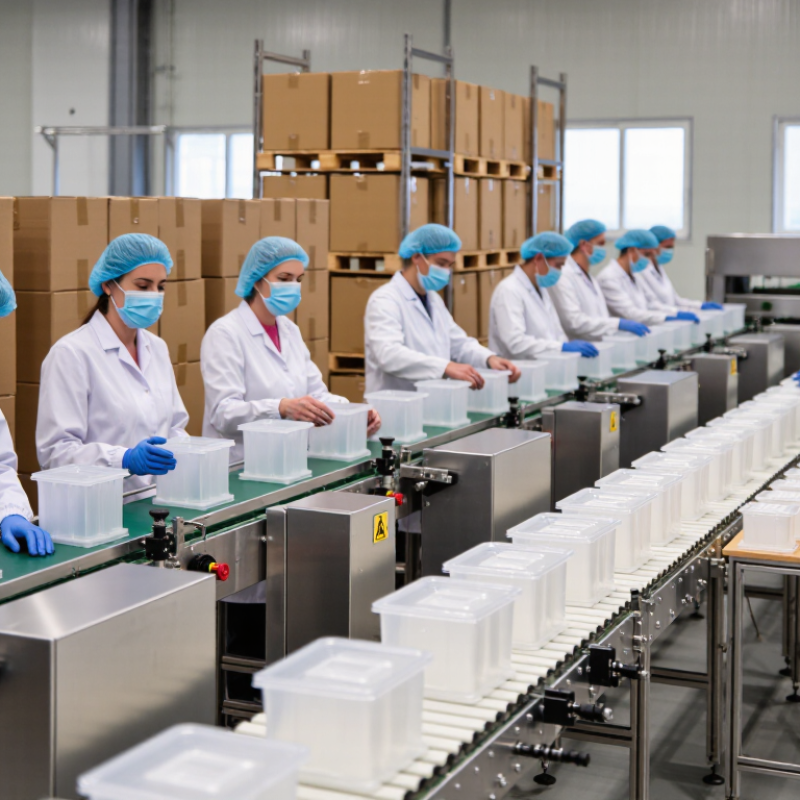
A reliable plastic packaging supplier should explain its process in practical terms. Ask who approves resin changes, how often dimensions are checked, and what happens when a batch falls outside specification. During a plant visit, look for calibrated gauges, labeled material lots, and clear records linking samples to production runs. Capacity matters. Request output figures for the exact format and machine type you need, not a broad factory-wide number. Compare trial-run results with promised lead times; small orders can reveal bottlenecks that a sales presentation may miss.
Material choice should match the product, filling conditions, and end-of-use plan. Ask suppliers to compare options such as mono-material structures, recycled content, and barrier layers, with test data for strength and sealing. The OECD’s Global Plastics Outlook (2022) estimates that 353 million tonnes of plastic waste were generated in 2019, and only 9% was ultimately recycled. That figure makes material choices worth discussing early. Request written specifications and sample packs, then test them under realistic handling and storage conditions. A supplier may offer many options, but not every option will suit your line. I would still double-check assumptions: a neat sample can behave differently at production speed.
Use this comparison framework to evaluate prospective suppliers. Capability ranges and requirements vary by product, region, and packaging format; confirm all claims with current documentation and production trials.
| Evaluation dimension | What to assess | Positive indicators | Evidence to request | Potential warning signs |
|---|---|---|---|---|
| Product and process expertise | Experience with the required format, such as films, pouches, bottles, tubs, or thermoformed trays; relevant forming, printing, sealing, or molding processes. | Can explain design constraints, tolerances, barrier needs, and likely failure modes for the specific application. | Comparable product samples, process descriptions, quality plans, and documented case examples with confidential details removed if needed. | Promises feasibility or performance without reviewing product requirements, drawings, or test conditions. |
| Production capacity | Available line time, output per shift, tooling availability, changeover time, and capacity during seasonal demand peaks. | Provides a realistic production plan, identifies constraints, and explains how capacity is reserved for repeat orders. | Capacity statement, production schedule assumptions, equipment list, and recent on-time delivery performance data. | Quotes a volume commitment without clarifying available capacity, lead time, or contingency arrangements. |
| Material options | Resin or film choices, structure and thickness, recycled-content options, and compatibility with the product and filling process. | Explains trade-offs in strength, clarity, sealability, barrier performance, temperature resistance, and recyclability for the intended use. | Material specifications, supplier declarations, test data, and regulatory documentation applicable to the product and destination market. | Uses broad claims such as “fully recyclable” without specifying the structure, local collection conditions, or supporting basis. |
| Quality management | Incoming-material checks, in-process controls, finished-product inspection, traceability, and corrective-action procedures. | Defines measurable acceptance criteria and can trace production lots to relevant materials and process records. | Quality-system certificates where applicable, inspection procedures, sample inspection reports, and nonconformance records. | No clear inspection criteria, lot identification, or process for handling defects and customer complaints. |
| Regulatory and food-contact suitability | Requirements for the product category and destination market, including applicable food-contact rules where relevant. | Identifies which requirements apply and provides documentation for the actual material and intended conditions of use. | Current declarations of compliance, migration or other relevant test reports, and material composition information as required. | Relies on generic certificates that do not cover the proposed packaging structure, intended use, or destination market. |
| Lead time and order flexibility | Sampling, tooling, production, and delivery timelines; minimum order quantities; and options for repeat or urgent orders. | Separates quoted lead times by stage and states assumptions about approvals, raw materials, and shipping. | Written quotation, sample and tooling schedule, minimum order terms, and delivery performance history. | Timeline excludes tooling, artwork approval, testing, or transport, or changes substantially after order placement. |
| Technical support and communication | Access to technical staff, response times, design feedback, sampling support, and escalation contacts. | Provides clear answers, documents decisions, and flags technical or schedule risks early. | Named role-based contacts, sample-development plan, and agreed communication and issue-escalation process. | Important technical questions are repeatedly passed between teams without a clear owner or written resolution. |
| Total cost and supply risk | Unit price alongside tooling, setup, freight, storage, testing, and the cost impact of defects or delivery delays. | Quotes clearly define inclusions, exclusions, price validity, payment terms, and contingency options for disruptions. | Itemized quotation, sample or tooling charges, delivery terms, and documented business-continuity or backup plans. | A low unit price obscures extra charges, unclear specifications, or unresolved dependence on a single material source. |
Choosing a plastic packaging supplier means checking how controls work on the production floor, not just collecting certificates. UNEP’s 2023 report, Turning off the Tap, estimates packaging uses about 36% of plastics produced worldwide. OECD’s Global Plastics Outlook (2022) reports that packaging generated 40% of plastic waste in 2019. These figures make material control and waste prevention practical screening issues. Ask for current ISO 9001 or ISO 22000 certificates, their scope, site coverage, and recent audit findings. Paperwork can look perfect. Still, it may not describe the line making your order.
Request lot-level traceability, material declarations, migration-test reports for the intended use, and documented change control. Check that test conditions match the actual food type, temperature, and contact time. For food-contact packaging, verify compliance with the destination market’s rules; requirements are not interchangeable. Ask how the supplier handles calibration, rejected batches, corrective actions, and subcontracted processes. A useful audit follows a sample lot from incoming resin to finished packaging. That takes time. Audits can miss problems between visits, so review complaint trends and corrective-action closure rates, too. A certificate is not batch-level proof.
A supplier’s customization capability should be tested against your actual production needs. Share drawings, target dimensions, material requirements, and print files, then request a production-like sample. Check seal strength, fit, and performance on your filling line—not just appearance. A neat sample can still hide a difficult production run. Confirm which design changes affect tooling, minimum order quantities, and cost. Ask for written lead times covering sampling, production, and shipping; one quoted date may not include every step.
Supply chain reliability needs evidence, not reassurance. Ask suppliers how they track order status, manage production capacity, and communicate delays. Request recent on-time delivery figures and a clear escalation contact. McKinsey Global Institute’s 2020 report estimated that companies can expect disruptions lasting a month or longer every 3.7 years. That makes backup capacity and realistic buffer stock worth discussing, even when they add cost. Smaller suppliers may offer flexibility, but their capacity can be harder to verify.
A supplier’s unit price is only the visible part of the cost. Compare quotes for the same material, thickness, dimensions, print coverage, order quantity, and delivery point. Add tooling, setup, freight, inspection, storage, and likely scrap. The Flexible Packaging Association’s 2024 State of the Flexible Packaging Industry report estimated U.S. sales at $42.9 billion in 2023, reflecting a broad market with many formats and specifications. A quote comparison works only when the specifications match. Check the math.
Shipping can quickly change the landed cost. UNCTAD’s Review of Maritime Transport 2024 reported that container spot rates rose about 150% between October 2023 and June 2024. Ask suppliers how they handle freight changes, delayed shipments, and partial deliveries. Agree on a named contact, response times, and escalation steps before production begins. A polished sales call is not a service-level commitment.
Read contract language closely. Specify tolerances, sample approval, defect reporting, replacement timelines, and who pays for unusable stock. Set clear rules for price adjustments, order changes, lead times, payment, and ownership of artwork or tooling. I would avoid treating a long contract as proof of protection; vague acceptance criteria can still cause arguments. Put measurable requirements in writing, then test them against a real order.
Compare total costs, communication, and contract terms—not just the quoted unit price.
How to read this: The bars show an illustrative cost breakdown per 1,000 units, including packaging, freight, amortized tooling, and an estimated quality or rework allowance. These figures are planning examples, not verified market quotes. Request comparable written quotes, then check response times, specification-change processes, tooling ownership, price-adjustment clauses, and remedies for defects or late delivery.
Ask who approves resin changes and how often dimensions are checked. Look for calibrated gauges, labeled material lots, and records linking samples to production runs. Good records matter.
Request output figures for your exact format and machine type. Compare trial-run results with promised lead times. Small orders help reveal bottlenecks.
Compare mono-material structures, recycled content, and barrier layers. Request strength and sealing test data. Match materials to the product, filling conditions, and end-of-use plan. A tidy sample may mislead.
Ask for current quality certificates, their scope, and covered production sites. Request lot-level traceability, material declarations, and documented change control. A certificate is not batch-level proof.
Check that tests match the intended food type, temperature, and contact time. Confirm requirements for the destination market. Details matter.
Follow one sample lot from incoming resin to finished packaging. Review calibration, rejected batches, corrective actions, and subcontracted processes. Audits take time.
Certificates may not describe the line making your order. Review complaint trends and whether corrective actions were completed. I may be overchecking, but paperwork alone feels thin.
Packaging used about 36% of plastics produced worldwide, while it generated 40% of plastic waste in 2019. Only 9% of plastic waste was ultimately recycled that year. The figures are sobering.
Choosing the right Plastic Packaging supplier starts with a clear understanding of your product’s protection needs, preferred materials, dimensions, and performance requirements. Compare suppliers’ technical expertise, manufacturing capacity, and material options to confirm they can meet both current demand and future growth. Ask how they maintain consistent quality, assess product safety, and meet the standards relevant to your market.
Next, evaluate their ability to customize packaging, provide dependable lead times, and manage supply chain disruptions. Look beyond unit price by considering tooling, shipping, minimum order quantities, and other costs over the full purchasing cycle. Clear communication, responsive problem-solving, and transparent contract terms also matter. A supplier that aligns with your requirements and works reliably with your team can support efficient operations and consistent packaging performance over time.