Choosing the right Heat Wrap Machine can affect packaging speed, product presentation, and daily operating costs. A suitable model should match your materials, production volume, workspace, and staff experience. A machine that performs well in one factory may disappoint in another. Details matter.
This guide explores ten practical tips for making a confident choice. It considers sealing consistency, temperature control, heating speed, film compatibility, conveyor size, and energy use. It also examines safety features, cleaning access, maintenance support, and supplier reliability. These points come from common packaging needs, where a loose seal or uneven film can damage a finished product. Small faults become expensive when repeated across hundreds of packages.
Look closely.
Reliable equipment should provide clear controls, stable operation, and usable technical documentation. Operators need to adjust settings without guessing, especially when switching between package sizes. A strong Heat Wrap Machine should also support routine inspections and simple part replacement. However, no machine is perfect. Marketing claims can sound impressive, yet real performance depends on installation, film quality, operator training, and workload. That is why practical testing remains valuable before purchase.
Consider your actual workflow.
The best decision balances performance, safety, service, and long-term value. Comparing specifications alone may miss important weaknesses. Whenever possible, request a demonstration, inspect the seal quality, and ask how quickly support responds. Careful evaluation helps businesses avoid unsuitable equipment and build a more dependable packaging process.
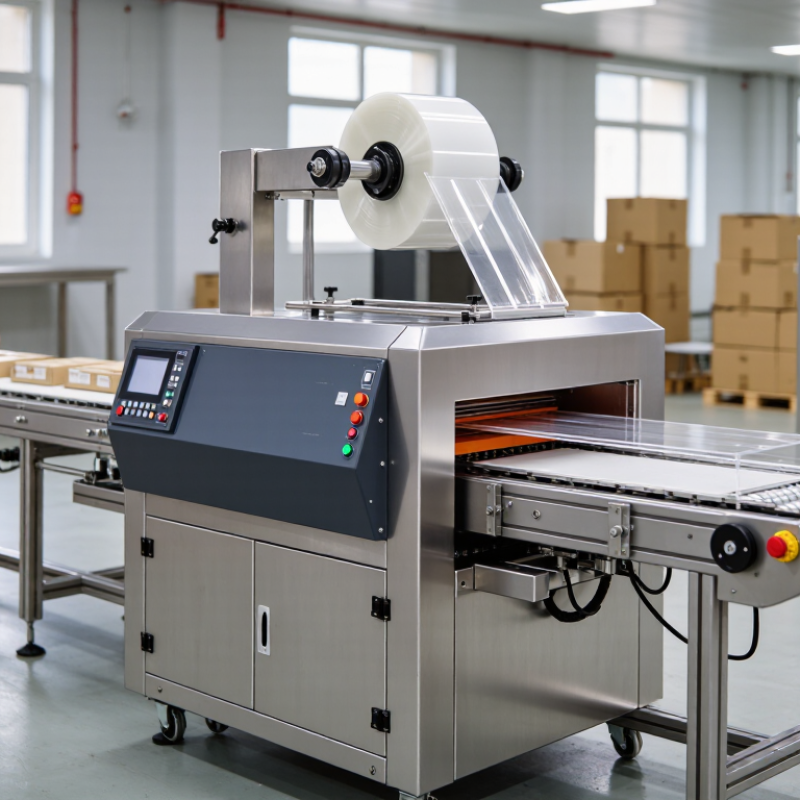
10 Tips for Choosing the Best Heat Wrap Machine
Understanding Heat Wrap Machines and Their Main Applications
A heat wrap machine uses controlled heat to seal or shrink plastic film around products. It usually combines a sealing bar, heating chamber, conveyor, and temperature controls. The correct machine depends on product size, film type, production speed, and available workspace. Check these details before comparing models. A compact unit may suit small batches. Larger operations need steady conveyor movement and stronger sealing performance.
Heat wrap machines support many applications. Retailers use them for boxed goods, stationery, and household items. Food processors may wrap trays, provided the film is approved for food contact. Manufacturers often protect spare parts from dust and moisture. Warehouses use shrink film to stabilize grouped products during handling. In my experience, film compatibility causes more trouble than expected. A machine can heat correctly but still create weak seals, wrinkles, or burned edges.
Look for adjustable temperature and sealing time. Test the machine with your actual products, not an empty sample. Measure the warm-up period and inspect the seal after cooling. Safety guards, emergency stops, and insulated surfaces deserve close attention. Ask about cleaning access, replacement parts, and operator training. Noise and power use also affect daily costs. I once underestimated workspace clearance, and the loading process became awkward. That mistake was avoidable. Product height, film width, and ventilation should be checked together. A reliable supplier should provide operating limits, maintenance guidance, and documented safety information.
| No. | Selection Tip | What to Evaluate | Typical Practical Guidance | Suitable Applications | Main Trade-Off |
|---|---|---|---|---|---|
| 1 | Match the machine to the product size | Check the maximum package length, width, height, and film width that the machine can handle. | Choose a working size with clearance around the largest regular product. Oversized equipment can waste space and energy. | Boxed goods, retail multipacks, books, household products, and small industrial components. | A larger sealing area offers flexibility but usually increases the machine footprint and purchase cost. |
| 2 | Select the appropriate machine format | Compare manual, semi-automatic, and automatic feeding, sealing, and shrinking operations. | Manual systems suit low-volume work; semi-automatic systems suit regular batches; automatic lines suit continuous production. | Sampling, seasonal packaging, contract packing, and high-volume manufacturing. | Automation improves throughput and consistency but requires more capital, setup, and maintenance. |
| 3 | Verify film compatibility | Confirm compatibility with film type, thickness, width, roll diameter, and folding method. | Common shrink films include polyolefin and polyethylene. Film requirements must be checked against the machine manual. | Retail presentation, bundling, transport protection, and moisture or dust reduction. | A wider film choice improves flexibility, while specialized films may increase material cost. |
| 4 | Check sealing quality and seal-bar design | Assess seal-bar length, sealing temperature control, seal strength, and resistance to film residue. | A consistent seal should be continuous, clean, and strong without excessive film burning or distortion. | Consumer goods, food-related secondary packaging, cosmetics, stationery, and hardware. | Advanced sealing controls improve appearance and reliability but can increase control-system complexity. |
| 5 | Evaluate shrink-tunnel performance | Review tunnel chamber dimensions, temperature adjustment, airflow control, conveyor speed, and insulation. | Adjustable heat and conveyor speed are important because different films and products shrink differently. | Products requiring a tighter appearance, grouped packs, and packages with irregular shapes. | Higher airflow and heat capacity can improve output but may raise energy consumption. |
| 6 | Calculate the required production rate | Measure packages per minute, operating hours, product changeover time, and expected peak demand. | Use sustained output rather than the advertised maximum speed when planning capacity. | Low-volume workshops, batch production, fulfillment operations, and continuous packaging lines. | Extra capacity reduces bottlenecks but may leave the machine underused during normal periods. |
| 7 | Consider product sensitivity to heat | Determine whether the product can tolerate heat exposure, warm surfaces, airflow, and dwell time. | Use lower temperatures, shorter exposure, or protective barriers for heat-sensitive items when permitted by the film process. | Printed materials, candles, certain plastics, electronics accessories, and temperature-sensitive contents. | Gentler settings may reduce shrink speed and require additional testing. |
| 8 | Review safety features | Look for guarding, emergency stops, over-temperature protection, heat shielding, and clear operating procedures. | The installation should provide adequate ventilation, safe access, and operator protection from hot surfaces and moving parts. | Any workplace using heated sealing equipment or shrink tunnels. | More safety equipment can increase initial cost but lowers operational risk. |
| 9 | Compare energy use and utilities | Check electrical voltage, rated power, warm-up time, insulation, and whether compressed air is required. | Confirm that the facility can support the machine’s electrical load and ventilation requirements before installation. | Small production rooms, warehouses, factories, and packaging departments. | Higher heating capacity supports faster recovery but normally consumes more electricity. |
| 10 | Assess maintenance and total cost of ownership | Include film waste, replacement heating elements, sealing components, cleaning time, training, service access, and downtime. | Choose a design that allows routine cleaning, straightforward adjustments, and easy access to wear parts. | Long-term production, multi-shift operations, and facilities with limited maintenance staff. | A lower purchase price may result in higher labor, waste, or downtime costs over the machine’s service life. |
Note: Actual capacity, temperature range, power consumption, and compatible film specifications vary by machine configuration, product geometry, film material, and operating conditions. Always confirm performance through application testing before purchase.
It seals or shrinks plastic film around products using controlled heat. A sealing bar and heating chamber handle the main work.
Match the machine with product dimensions, film width, production speed, and workspace. Check loading clearance carefully. A compact unit suits small batches, while larger operations need steady conveyor movement.
Incorrect film can create weak seals, wrinkles, or burned edges. Test your actual film before purchase. An empty sample may hide real problems.
Look for guarded heating areas, emergency stops, insulated surfaces, and door interlocks. Controls should show actual temperature. Clear procedures matter too.
Choose insulated heating elements, standby mode, and adjustable cycle settings. Measure usage with a plug-in power meter. Brochures may not show daily waste.
Check access to sealing wires, thermocouples, fans, and filters. Ask for calibration instructions and replacement parts. Keep a log of temperature drift and seal quality.
Request a live demonstration with your products and film. Run it for several hours. Inspect seals after cooling. Reliability claims need evidence, not optimism.
Include energy, film waste, labor, repairs, downtime, and service life. Do not focus only on cycle speed. I once underestimated film-change time. That mistake reduced output more than expected.
Choosing the right Heat Wrap Machine begins with understanding how the equipment will be used, whether for product protection, bundling, insulation, or streamlined packaging. Start by defining the required heating method, wrapping style, product dimensions, operating speed, and expected production volume. These details will help you select a machine with suitable capacity, wrapping precision, temperature range, and compatibility with the materials you plan to use.
It is also important to compare practical features such as adjustable controls, automation level, safety protection, energy efficiency, and ease of maintenance. A reliable machine should provide stable performance, accessible components, clear operating instructions, and responsive technical support. Instead of focusing only on the initial purchase price, consider installation, training, consumables, maintenance, downtime, and expected service life. By evaluating performance, safety, material compatibility, operating costs, and long-term value together, you can choose a Heat Wrap Machine that supports consistent results and efficient production.

 Huisu
Huisu