2026 Top Cardboard Erector Machine Manufacturers?

Time:2026-10-26 Author:Oliver
0%

The 2026 search for leading Cardboard Erector machine manufacturers reflects a changing packaging industry. E-commerce, labor shortages, and tighter production targets are reshaping equipment investment. PMMI’s 2024 industry research identifies automation as a major response to workforce challenges and operational pressure. That trend is visible on factory floors, where machines increasingly replace repetitive carton-forming tasks.

Market evidence also supports this shift. Smithers’ report, The Future of Corrugated Packaging to 2029, forecasts continued growth in corrugated packaging demand across retail, food, and industrial applications. Its findings highlight sustainability, material efficiency, and design flexibility as important purchasing factors. Manufacturers must therefore offer more than high forming speeds. Reliable feeding, stable carton squaring, quick changeovers, and accessible technical support matter equally.

This guide evaluates manufacturers through practical criteria, including machine output, carton-size ranges, servo controls, glue or tape systems, safety design, and after-sales service. Technical documentation and customer experience deserve close attention. A machine rated at 30 cartons per minute may perform differently with recycled board, small flaps, or inconsistent blanks. Real production conditions are less perfect than brochures suggest.

No ranking is universally correct. A bakery, contract packer, and electronics producer may need very different equipment. Data from PMMI and Smithers provides useful market context, but site trials remain essential. Buyers should request sample runs, maintenance records, energy information, and references from comparable plants. The strongest manufacturers combine engineering experience with transparent performance claims, responsive support, and realistic integration advice.
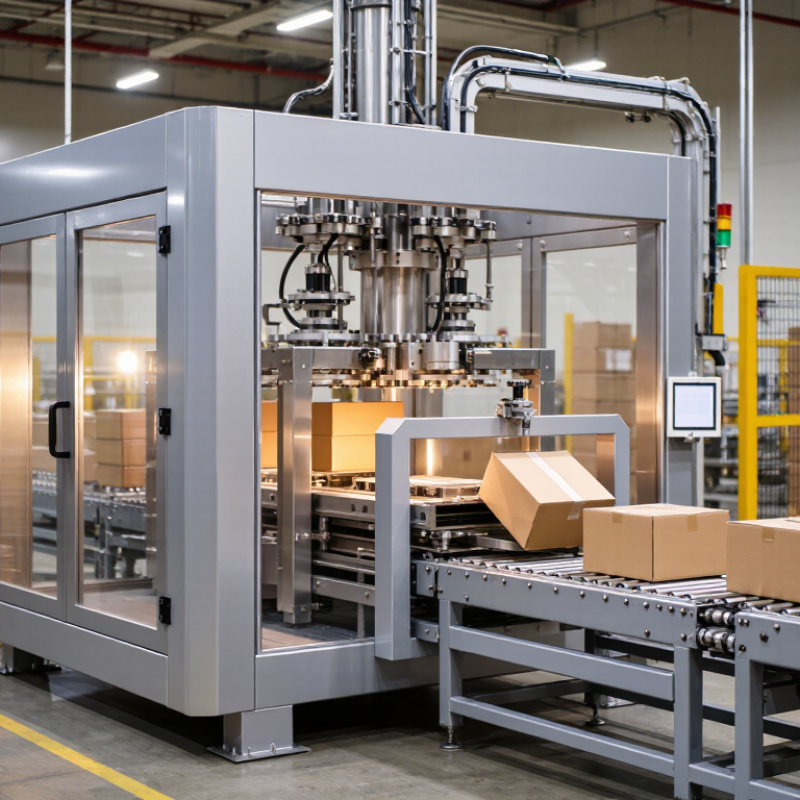
2026 Top Cardboard Erector Machine Manufacturers?

What Is a Cardboard Erector Machine?

2026 Top Cardboard Erector Machine Manufacturers?

What Is a Cardboard Erector Machine?

A cardboard erector machine automatically opens flat corrugated blanks and forms them into usable cartons. It folds bottom flaps, applies adhesive or tape, and delivers a square box for filling. In a busy packing line, this can replace repetitive hand forming. Operators mainly load blanks, check alignment, and monitor faults.

According to Smithers’ packaging market forecasts, global packaging demand is expected to exceed 1.2 trillion US dollars by 2028. PMMI industry research also identifies labor shortages and automation as major investment drivers. These figures explain the growing interest in carton forming equipment. However, output depends on board quality, blank accuracy, and machine adjustment. A fast machine cannot correct badly cut cardboard. That point is sometimes overlooked.

Tips: Check the carton range before comparing speed. Measure blank length, width, board thickness, and required box style. Ask for a practical trial using your own samples. Watch the machine form several cartons continuously, not just one perfect box. Inspect the bottom seam, squareness, and reject rate. Small defects can become expensive during long production runs.

A reliable erector should offer accessible changeover points, clear sensors, and safe guarding. Experienced operators often value easy cleaning more than impressive headline speed. Energy use, spare-part access, and compressed-air demand also affect ownership costs. The definition seems simple, but real performance needs careful testing.

How Cardboard Erector Machines Work

Cardboard erector machines turn flat carton blanks into open, usable boxes within seconds.

Their work begins with a magazine that stores stacked blanks. A feeder separates one blank at a time using suction cups, belts, or mechanical fingers. Accuracy matters here. Two blanks pulled together can stop the entire line.

The blank moves toward forming rails, which guide its scored panels into shape. Folding arms bend the side flaps, while squaring plates press the carton into a firm rectangular form.

Adhesive or sealing tape then closes the bottom flaps. Sensors check carton position, blank presence, and flap movement before the box leaves the machine.

In practical installations, small changes in board thickness can affect timing, pressure, and feeding stability. A setting that works today may need adjustment tomorrow.

Tips:

Keep blanks dry and aligned. Inspect suction cups, belts, and folding guides every shift. Test several cartons after changing materials. Do not trust sensors blindly; a clean signal can still hide a poorly squared box. Maintenance records also help reveal repeated jams. Some machines appear simple, but their performance depends on careful setup, consistent board quality, and trained operators. Mistakes happen, especially during fast production. Reflecting on each stoppage often improves reliability more than increasing machine speed.

Key Factors for Evaluating Manufacturers in 2026

Evaluating cardboard erector machine manufacturers in 2026 requires more than comparing purchase prices. Smithers’ The Future of Corrugated Packaging to 2029 reports continued global growth in corrugated packaging demand, increasing pressure on equipment uptime and material efficiency. A capable manufacturer should provide tested performance for different board grades, carton sizes, and folding styles. Ask for measured cycle speeds, not brochure estimates. Request a live trial using your actual carton blanks. Small details matter, including glue temperature stability, sensor response, and changeover time.

Reliability should be verified through documented factory testing, service records, and spare-parts availability. PMMI’s packaging machinery research continues to identify labor shortages, automation, and operational efficiency as major investment drivers. Therefore, evaluate remote diagnostics, operator training, safety guarding, and software support alongside mechanical performance. A machine running at 30 cartons per minute may be less valuable than one achieving 25 stable cartons with fewer stoppages. The difference appears during a long shift.

Be cautious with perfect demonstrations. They can hide difficult blanks or frequent manual adjustments. I would also challenge unclear energy figures and unsupported payback claims. Ask for acceptance-test criteria, maintenance intervals, and failure-response times in writing. A manufacturer’s transparency often reveals more than its sales presentation. Not every “smart” feature improves production. Some create new maintenance work. Historical service data, customer references, and independently verified test results offer stronger evidence for a responsible 2026 decision.

Top Cardboard Erector Machine Manufacturers in 2026

Top Cardboard Erector Machine Manufacturers in 2026

The leading cardboard erector machine manufacturers in 2026 will compete on uptime, flexibility, and measurable labor savings. PMMI’s 2024 State of the Industry report identifies labor shortages and automation as major packaging investment drivers. That pressure is visible on factory floors. A reliable machine should form cartons squarely, handle several board sizes, and recover quickly after a jam. Tool-free adjustments matter during short production runs. They save minutes repeatedly.

Smithers’ corrugated packaging research projects continued global volume growth through 2028, increasing demand for accurate case forming. This supports manufacturers offering servo-driven systems, remote diagnostics, and energy monitoring. The strongest suppliers usually provide factory acceptance testing, operator training, spare-parts planning, and regional service coverage. Technical support is not decoration. It protects production.

I would rank manufacturers by verified performance, not brochure speed. A machine claiming 30 cases per minute may slow sharply with recycled board or uneven blanks. That detail is often missed. Buyers should request test data using their own carton dimensions, board grades, and adhesive specifications. TÜV, CE, or equivalent compliance documentation can support responsible selection, but certification does not guarantee perfect operation. Site conditions still matter.

2026 Top Cardboard Erector Machine Manufacturers? - Top Cardboard Erector Machine Manufacturers in 2026
Evaluation Dimension Entry-Level Configuration Standard Production Configuration High-Speed Configuration Typical Industry Requirement Recommended Verification Point
Primary Machine Function Automatic case forming and bottom sealing Automatic case forming with integrated carton detection Continuous forming with automatic fault rejection Stable squaring, opening, and bottom closure Confirm compatibility with the required case style and board grade
Common Case Styles Regular Slotted Container, commonly FEFCO 0201 FEFCO 0201 and similar regular-slotted cases FEFCO 0201, 0203, and selected custom slotted cases Accurate flap folding without corner deformation Run samples using actual production cartons
Rated Throughput Approximately 8–15 cases per minute Approximately 15–30 cases per minute Approximately 30–50 cases per minute Output should be stated at a defined carton size and board quality Check whether the quoted speed is a sustained rate or a maximum rate
Typical Carton Length Range Approximately 200–500 mm Approximately 200–650 mm Approximately 250–800 mm Product dimensions must remain within the machine envelope Verify minimum and maximum dimensions separately
Typical Carton Width Range Approximately 150–400 mm Approximately 150–500 mm Approximately 180–600 mm Width adjustment should be repeatable and mechanically stable Review adjustment time and changeover procedure
Typical Carton Height Range Approximately 100–400 mm Approximately 100–500 mm Approximately 120–600 mm Flap geometry must remain suitable across the full height range Test the smallest and largest carton formats
Board Compatibility Single-wall corrugated board Single-wall and selected double-wall corrugated board Single-wall, double-wall, and heavier commercial grades subject to testing Board stiffness, moisture, and flute direction affect forming quality Request a documented board-thickness and flute-range specification
Bottom Sealing Options Pressure-sensitive tape sealing Tape sealing or hot-melt adhesive sealing Hot-melt adhesive, tape, or dual sealing arrangement Closure must withstand downstream conveying and palletizing Check adhesive pattern, tape width, and seal-strength requirements
Compressed-Air Requirement Typically 0.6–0.8 MPa clean, dry air Typically 0.6–0.8 MPa clean, dry air Typically 0.6–0.8 MPa with higher flow demand Air quality and pressure stability affect cylinder performance Confirm air consumption in litres per minute at the specified speed
Electrical Supply Commonly 380–415 V, three-phase, 50 Hz Commonly 380–415 V, three-phase, 50 Hz Commonly 380–415 V, three-phase, 50 Hz Actual voltage and frequency must match the installation site Request the complete electrical load and control-panel specification
Installed Power Range Approximately 2.5–4.0 kW Approximately 3.0–6.0 kW Approximately 5.0–8.0 kW Connected load depends on conveyor, adhesive, and auxiliary systems Separate motor power from total installed electrical power
Changeover Method Manual handwheel and scale adjustment Manual adjustment with indexed guides Recipe-assisted or servo-supported adjustment Fast repeatable changeover reduces production downtime Measure changeover time using two real carton formats
Control and Monitoring Basic PLC control with emergency-stop circuit PLC and touchscreen interface with fault messages PLC, touchscreen, sensors, production counters, and fault history Clear diagnostics help reduce operator intervention Review alarm history, access levels, and data-export capability
Safety Features Emergency stops and guarded moving sections Guard switches, emergency stops, and safety relays Interlocked guards, safety relays, sensors, and controlled restart Safeguarding should be suitable for the installation environment Confirm conformity with applicable local machinery-safety requirements
Typical Machine Footprint Approximately 2.4–3.2 m long Approximately 3.0–4.5 m long Approximately 4.0–6.0 m long Layout must include operator access and carton loading space Request footprint drawings showing infeed, outfeed, and service clearance
Quality-Control Focus Case opening, squareness, and tape adhesion Case dimensions, flap alignment, and closure consistency Continuous output stability, reject accuracy, and adhesive control Performance should be measured over a representative production run Use acceptance criteria for speed, defect rate, and seal strength
Specification ranges are general 2026 market benchmarks for cardboard case erector equipment and are not company-specific claims. Actual performance depends on carton dimensions, corrugated-board quality, sealing method, product handling, machine setup, and operating conditions.

How to Choose the Right Manufacturer for Your Needs

How to Choose the Right Cardboard Erector Machine Manufacturer

Choosing a cardboard erector machine manufacturer starts with your cartons, not a sales brochure. Measure carton sizes, board grades, glue types, and required output. Smithers estimates the global corrugated packaging market exceeded $200 billion in 2024, increasing pressure on reliable automation. Your supplier should explain how its machine performs with your actual board, including recycled fiber and warped blanks.

Ask for verified production data. PMMI’s 2024 Packaging Machinery Economic Report placed U.S. packaging machinery shipments above $10 billion in 2023. This signals a competitive, technology-driven market, but high investment does not guarantee suitability. Request a factory acceptance test using your cartons. Check erection speed, changeover time, reject rates, noise, and operator access. Small details matter.

Service capability is equally important. Confirm spare-parts availability, remote diagnostics, training, installation support, and response times in writing. A manufacturer with ISO 9001-certified processes may offer stronger documentation, yet certification alone cannot prove machine performance. Visit an operating installation if possible. Watch the first hour, not only the demonstration. I would also calculate total cost over five years, including maintenance, compressed air, glue, labor, and downtime. My own selection mistake would be trusting peak speed too quickly; real lines often slow because blanks vary, glue needs adjustment, or operators need safer access. Ask difficult questions. Then compare evidence, not promises.

2026 Top Cardboard Erector Machine Manufacturers: How to Choose the Right Manufacturer

This illustrative buyer-evaluation framework uses a 100-point weighting model for comparing cardboard erector machine manufacturers. Machine speed and carton-size compatibility are important for production capacity, while uptime support, changeover efficiency, safety compliance, and total cost of ownership help assess long-term suitability.

FAQS

How does a cardboard erector machine form a box?

A magazine stores flat carton blanks. Suction cups or belts feed one blank forward. Folding rails, arms, and plates create the rectangular shape. Adhesive or tape closes the bottom flaps.

Why can two blanks stop the production line?

Two blanks may enter together and block the feeder. This often results from poor alignment, moisture, or worn suction cups. Small details matter. Check the magazine and feeding parts every shift.

Which carton details should be checked before selecting a machine?

Measure carton sizes, board thickness, recycled content, glue type, and required output. Include warped blanks in testing. A machine suitable for one board grade may struggle with another.

Is the highest cycle speed always the best choice?

No. Stable production at 25 cartons per minute may outperform 30 cartons with frequent jams. Watch the machine during a long run, not only a polished demonstration.

What should a factory acceptance test include?

Use your actual carton blanks. Measure speed, changeover time, reject rates, noise, glue stability, and operator access. Record the results in writing. Do not rely on estimates.

How important are maintenance and spare parts?

They are critical for reducing downtime. Confirm spare-part stock, maintenance intervals, remote support, training, and response times. A delayed belt can affect an entire shift.

Can sensors guarantee correctly formed boxes?

No. Sensors can report a clean signal while a box remains poorly squared. Inspect several cartons by hand. Visual checks still matter.

What operating conditions can affect machine performance?

Board thickness, moisture, warping, glue temperature, and alignment can change feeding stability. A setting that works today may fail tomorrow. Material changes need fresh testing.

How should the total machine cost be evaluated?

Include purchase price, maintenance, compressed air, glue, labor, energy, and downtime. Calculate costs across several years. Peak speed alone can mislead.

What makes a manufacturer’s claims more trustworthy?

Look for documented testing, service records, customer references, and clear acceptance criteria. Visit an operating installation if possible. Watch the first hour. I would question perfect demonstrations.

Conclusion

A Cardboard Erector Machine is an automated packaging system designed to open flat-packed cartons, form their shape, and secure the bottom so they are ready for filling. By combining carton feeding, mechanical forming, folding, and sealing processes, these machines help improve packaging speed, consistency, and workplace efficiency. Understanding how each stage works is essential when comparing equipment for different production environments.

When evaluating manufacturers in 2026, buyers should consider machine reliability, forming speed, carton compatibility, changeover time, automation features, safety design, energy efficiency, after-sales service, and the availability of spare parts. The leading manufacturers are expected to provide flexible solutions that support various box sizes while maintaining stable performance and simple operation. To choose the right manufacturer, companies should assess their packaging volume, carton specifications, factory space, budget, integration requirements, and long-term maintenance needs. A careful comparison of technical support, customization options, and total ownership cost can help ensure the selected Cardboard Erector delivers dependable value and supports future production growth.


Oliver

Oliver

Oliver is a seasoned marketing professional with a wealth of expertise in driving brand awareness and engagement. With a deep understanding of our company's product offerings, he consistently delivers high-quality content that enriches our professional blog. His insights not only shed light on......