Why Choose Metal Band Cutters for Your Business?

Time:2026-11-23 Author:Mason
0%

Metal Band Cutters can make a packaging line safer, faster, and easier to manage when they match the strap material and daily workload. A well-chosen cutter slices cleanly through steel banding, helping reduce sharp, springing ends around workers, pallets, and nearby equipment. It should also feel balanced in the hand. That matters during a long shift, when a heavy or awkward tool can slow repeated cuts.

The right choice depends on more than price. Consider band width, thickness, access to the cut, expected use, and whether a manual or powered model suits the work area. Check the blade material, handle grip, replacement-part availability, and the effort needed for routine maintenance. A cutter that performs well in a quiet demonstration may feel different beside a busy loading dock. Test it on the banding your team actually uses. Small detail. Big difference.

For a publishable expert attribution, insert a verified specialist’s name and confirm the wording: “[Verified expert name], a packaging-equipment specialist, puts it this way: ‘A cutter should make each cut controlled, comfortable, and predictable—not simply quick.’” Treat that sentence as suggested wording, not a sourced quotation. Buyers should also review their own cutting procedures and provide suitable training. No tool removes every risk, and even a good choice deserves regular inspection.
Why Choose Metal Band Cutters for Your Business?

What Metal Band Cutters Are and How They Work

Metal band cutters are hand tools designed to sever steel strapping used to secure bundles, crates, and palletized loads. Unlike general-purpose shears, they have hardened cutting edges shaped to handle narrow metal bands. Many models also include a guard or retaining feature to help control the cut end. That detail matters. Tensioned strapping can spring back when released.

In use, the operator positions the cutter’s jaws around the band and keeps the tool aligned with the strap. Squeezing the handles drives the blades through the metal; heavier-duty designs may use a longer handle for added leverage. The load should remain stable, and the free end should be controlled before cutting. Keep hands clear of the band’s path. Simple, but easy to underestimate.

Cutting performance depends on band width, thickness, tool condition, and proper positioning. A dull or mismatched cutter may crush the strap instead of making a clean cut. Inspect the jaws for wear, and follow the tool’s operating guidance. One practical limitation is that no single cutter suits every strapping job. Choosing by the material and band size is more reliable than choosing by appearance alone.

Why Choose Metal Band Cutters for Your Business? - What Metal Band Cutters Are and How They Work

Cutter type What it is and how it works Common business use Practical considerations
Manual long-handle cutter A hand-operated tool with cutting jaws and long handles. The user positions the band in the jaws and applies force through the handles to shear it. Occasional cutting of steel strapping in shipping, receiving, warehouses, and maintenance work. Portable and does not need a power source. Check that the cutter is rated for the band’s material, width, and thickness.
Ratchet-style cutter A hand tool that advances its cutting action in stages using a ratcheting mechanism, reducing the need for one continuous squeeze. Repeated cutting tasks or jobs where a controlled, incremental cutting motion is useful. The mechanism can help with operation, but the tool’s stated capacity still determines which band sizes and grades it can cut.
Powered cutter A powered tool uses an electric, pneumatic, or hydraulic mechanism to drive the cutting jaws. The power source and cutting design vary by model. Higher-volume operations where powered equipment is appropriate for the work rate and available setup. Requires a compatible power source and routine inspection. Confirm the tool’s specified banding capacity and follow its operating instructions.
Cutting action Cutting edges meet across the metal band to shear it. Some designs hold or guide the strap end during the cut; the exact feature depends on the tool. Removing steel strapping from bundled goods, pallets, or secured loads. Secure the load and control the band before cutting. Tensioned steel strapping can recoil and cause injury when released.
Tool selection Selection is based on the strapping material, dimensions, tension, cutting frequency, work location, and the cutter’s rated capacity. Matching a cutting tool to the actual packaging and workload in a business operation. Do not assume one cutter works for every band. Review the tool’s specifications and use suitable eye, hand, and other required protective equipment.

Main Components and Cutting Methods

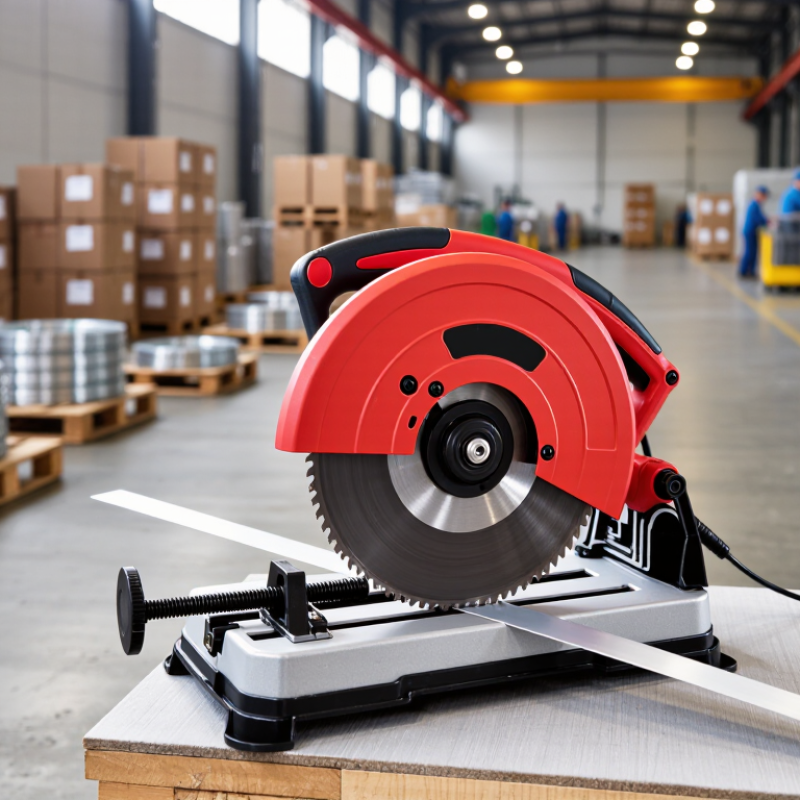
A metal band cutter relies on several parts working together. The blade does the cutting, while drive and idler wheels keep it moving under tension. Guides support the blade near the workpiece, helping limit sideways drift. A vise holds stock firmly; even slight movement can leave a rough or angled edge. The frame and feed system control the blade’s travel. Some machines use hydraulic feed, while others rely on gravity or manual adjustment. Coolant helps manage heat and carry chips away.

Different cutting methods suit different jobs. Straight cuts are common for bars, pipes, and structural sections. A swiveling head or adjustable vise can make miter cuts for angled joints. Bundle cutting can improve throughput when several similar pieces are secured together, though every piece must be clamped evenly. Blade pitch and speed should match the material and its thickness. Too many teeth may clog in a thick section; too few can make thin stock vibrate. Small details matter.

For a busy shop, repeatability is as important as cutting speed. Operators should check blade tension, guide alignment, and coolant flow before production runs. Listen for unusual vibration, too. It can signal loose stock or a worn blade, but diagnosing the cause is not always immediate. Cutting results vary with material condition and setup, so a short test cut can prevent a costly batch of scrap.

Materials and Applications Across Industries

Metal band cutters are designed for the tough strips used to secure loads, but the right tool depends on the band material. Steel strapping is strong and can spring back when cut. A guarded cutter with a sharp, hardened-steel blade helps control the cut and reduce burrs. Stainless steel may resist corrosion, while aluminum banding is lighter and easier to shear. Match the cutter’s rated capacity to the band’s width and thickness; a tool that is too small may leave a rough edge or require excessive force. Small details matter.

Different workplaces face different cutting conditions. In warehouses and shipping areas, workers often remove steel or plastic-coated bands from pallets. Construction crews may cut metal bands holding bundles of pipe, timber, or sheet materials. Manufacturing and metalworking facilities can use cutters during packing and material handling, where repeated cuts make grip comfort and blade durability important. Keep hands out of the band’s recoil path, and secure the load before cutting.

Choose for the material, the cut frequency, and the space around the work—not just the lowest purchase price. A compact cutter suits occasional pallet opening, while heavier-duty models may be more practical for frequent, thicker strapping. Yet bigger is not always better; an oversized tool can be awkward in tight spaces. Check blade condition regularly, because a dull edge encourages forceful cuts. Real work is rarely as tidy as a product chart suggests.

Why Choose Metal Band Cutters for Your Business?

Representative densities of common metals processed across manufacturing industries.

Aluminum is common in transportation and construction, while steel and stainless steel are widely used in structural, energy, and food-processing equipment. Copper is frequently used in electrical applications. Values are representative; actual density varies by alloy and grade. Density alone does not determine blade selection—material hardness, stock dimensions, and cutting conditions also matter.

Business Benefits of Using Metal Band Cutters

Metal band cutters can make routine packaging work faster and more consistent. A suitable cutter severs steel strapping cleanly, reducing repeated effort when staff open pallets or prepare bands for disposal. In a busy shipping area, saving a few seconds on each package can free up time for labeling, inspection, and loading. The cut ends are easier to manage, too.

For teams handling many strapped loads, a purpose-built tool can offer better control than improvised cutting methods. Choose a cutter rated for the band’s width and thickness, and check that its grips feel secure with work gloves. Keep the tool maintained; dull or damaged blades may require extra force. That matters. Still, a cutter alone will not fix a poorly organized packing station, and training takes time. It is worth reviewing the workflow before buying several tools.

Tips: Secure the band before cutting, and keep your face and hands clear of its recoil path. Wear appropriate eye protection. Inspect the cutter regularly, and follow its operating instructions. Small habits help.

Factors to Consider When Selecting a Metal Band Cutter

Why Choose Metal Band Cutters for Your Business?

Factors to Consider When Selecting a Metal Band Cutter

Choose a cutter around the material you actually process. Measure the largest stock, typical batch size, and tightest required tolerance. A machine that handles a wide steel bar may still struggle with thin-wall tubing. Check its cutting capacity, blade speed range, and available blade pitches. Match tooth pitch to the material so teeth engage smoothly instead of snagging. Also assess clamping strength, coolant delivery, and how easily operators can change blades. Small details matter. A difficult blade change can quietly slow a busy shift.

Safety and serviceability deserve equal attention. The U.S. Bureau of Labor Statistics’ 2023 Survey of Occupational Injuries and Illnesses reported 2.8 recordable cases per 100 full-time workers in manufacturing. This is an industry-wide rate, not a cutter-specific risk estimate, but it reinforces the value of evaluating guards, emergency stops, and chip controls. Consider spare-part availability, maintenance access, noise, and floor space. Ask suppliers for a live cutting demonstration using your stock; catalog figures alone may not reflect your setup. I would also check cut squareness over several pieces, not just one.

Tips: Bring a sample bar and record cut time, blade life, and finish quality during a trial. Compare results with your current process. No machine fits every job perfectly.

FAQS

What type of cutter works best for steel strapping?

Choose a guarded cutter with a sharp, hardened-steel blade. Match its rated capacity to the band’s width and thickness. Steel can spring back.

Can one cutter handle every band material?

Not always. Stainless steel resists corrosion, while aluminum is lighter and easier to shear. Check the tool’s capacity before cutting coated bands.

How should I choose a cutter’s size?

Consider cutting frequency and workspace. A compact tool suits occasional pallet opening. Heavier-duty cutters may help with thick bands and repeated cuts.

Where are metal band cutters commonly used?

Workers use them in warehouses, shipping areas, construction sites, and manufacturing facilities. They cut bands around pallets, pipe bundles, timber, and sheet materials.

What safety steps matter when cutting a band?

Secure the load first. Keep your hands and face clear of the recoil path, and wear appropriate eye protection. Small habits help.

How can I keep a cutter working well?

Inspect the blade regularly for dullness or damage. A worn edge may demand extra force. Follow the tool’s operating instructions.

Can a cutter make packaging work faster?

A suitable cutter can make repeated pallet opening more consistent. Cleaner cut ends are easier to manage, and saved seconds can support labeling or inspection.

Will buying a cutter solve an inefficient packing station?

No. Tool choice helps, but workflow and training matter too. Review the work area before buying several cutters. There is no perfect setup.

Conclusion

Metal Band Cutters are specialized tools designed to cut metal strapping and similar materials safely and efficiently. Their main components typically include a cutting mechanism, handles or a power source, and features that help hold or guide the band during cutting. Depending on the design, they may use a shearing or blade-based method. Their construction and cutting capacity vary to suit different materials, thicknesses, and applications in industries such as manufacturing, warehousing, construction, and shipping.

For a business, choosing a suitable cutter can improve work speed, reduce manual effort, and support more consistent cutting practices. Selection should take into account the type and thickness of metal band being handled, expected workload, operating method, user comfort, maintenance needs, and safety features. Matching the tool to the task helps businesses balance productivity, durability, and ease of use while supporting reliable day-to-day operations.


Mason

Mason

Mason is a seasoned marketing professional with a deep expertise in the company's offerings and a passion for driving brand awareness. With a strong background in digital marketing strategies, he has an innate ability to connect with diverse audiences and effectively communicate product benefits.......